Neptune line astrocartography meaning
What a Neptune line means in astrocartography on each angle: blurred boundaries, best on the Neptune MC, hardest on the Neptune DC, and in Human Design mode.

Photo: Lightscape / Unsplash
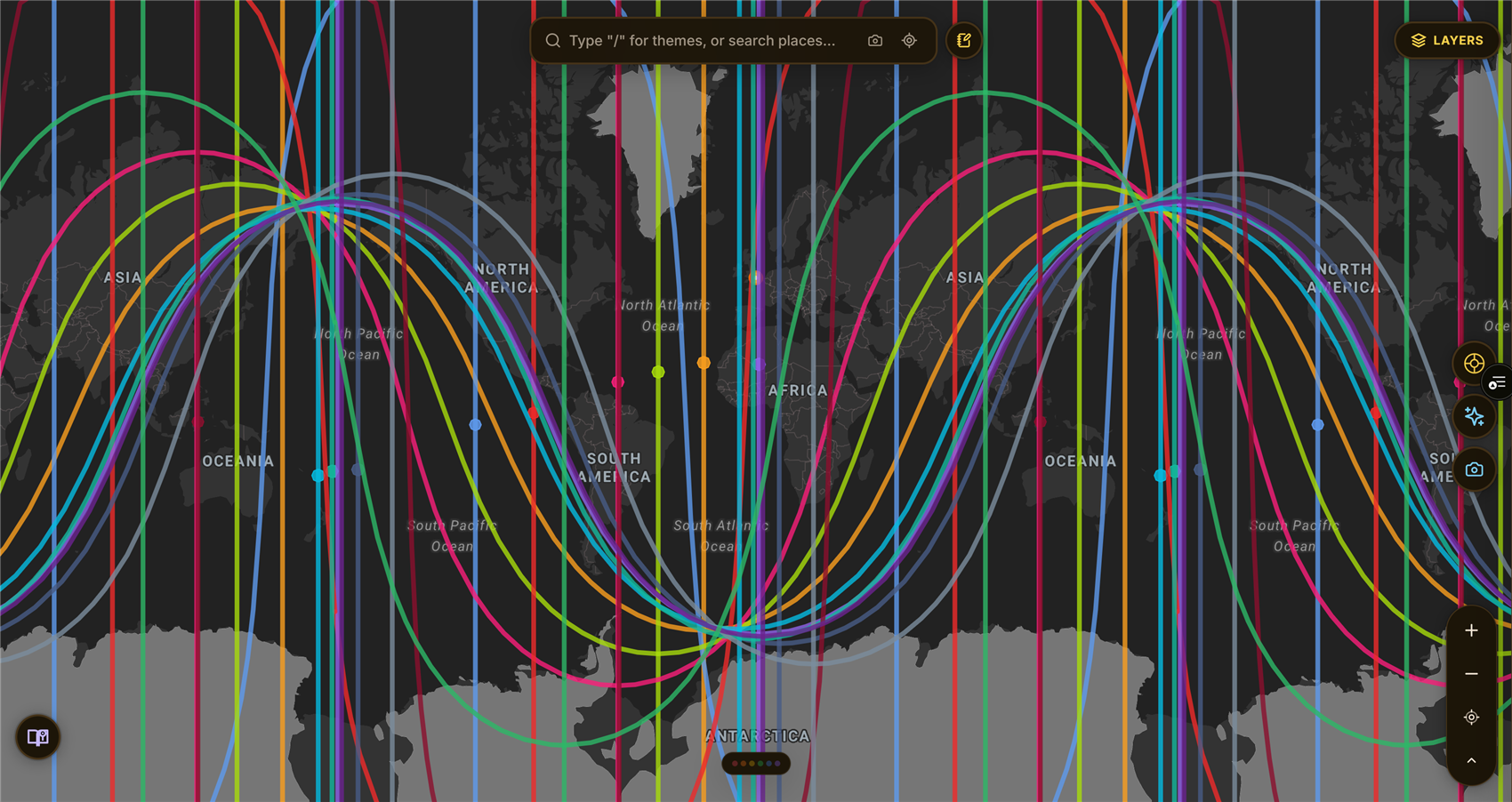
A Neptune line marks where Neptune was rising, setting, overhead, or underfoot at the moment you were born. A Neptune line blurs boundaries: dreamy, sensitive, sometimes confusing, often creative or spiritual in flavor. As an outer planet, Neptune moves slowly: its lines mark generational, structural shifts rather than personal quirks, and anyone born within a few years of you carries a version of the same lines in roughly the same places.
This page covers Neptune on each of the four angles. The pillar treatment of the outer planets is deliberately broader than for the inner ones; for the general mechanics of orb and angle type, see the hub guide.
Neptune MC line: the creative calling
The MC is where Neptune tends to be at its best, for artists, healers, and anyone whose work benefits from imagination. The MC is the public, career-facing angle, and Neptune there makes the public role creative or spiritual in flavor. The cost is ambiguity: a Neptune-flavored reputation is evocative rather than precise, which suits some careers far better than others.
Neptune DC line: the idealized partner
The DC is where Neptune is at its most disorienting: relationships can feel idealized right up until reality catches up. The DC brings a planet in through other people, and Neptune there draws idealized or confusing partnerships. The romance is real; so is the fog. This is the Neptune angle to treat with the most care.
Neptune AC line: dreamy and permeable
On the AC, Neptune reads as dreaminess, sensitivity, and blurred boundaries in the first person. The AC is where a planet leads, so Neptune here softens the edges of how you show up and how much of other people's weather you absorb. Rich for intuition and art, draining for anyone who needs firm edges to function.
Neptune IC line: the dissolving home
On the IC, Neptune brings a dissolving, dreamlike home life. The IC is the private angle of home and roots, and Neptune there makes the foundations poetic but soft: inspiring for a retreat or a studio, ambiguous for anyone who wants home to be the solid part of life.
How close counts
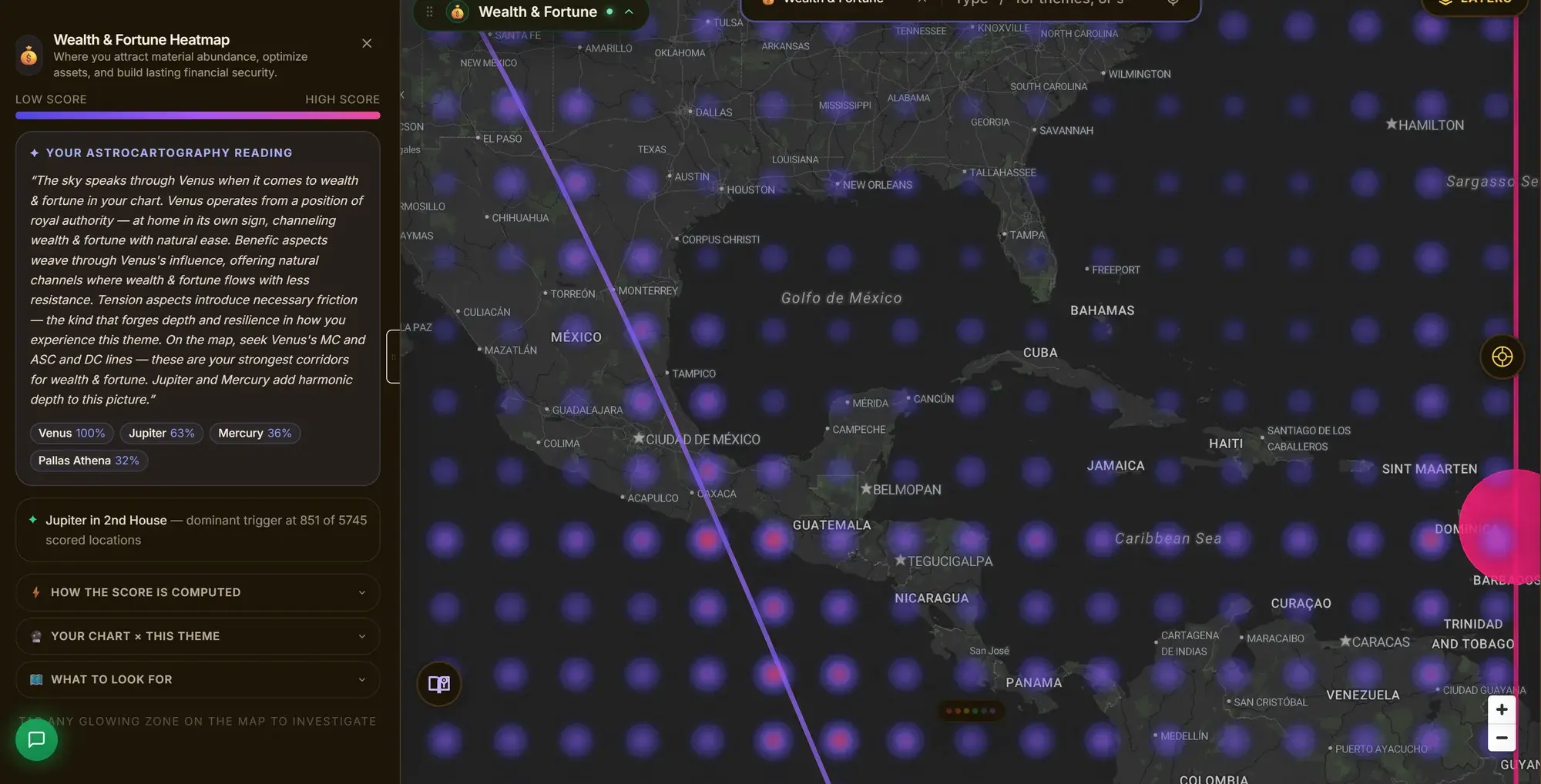
Neptune lines follow the same orb logic as every line: strongest on the exact line, tapering with distance. Because outer-planet lines are generational, what personalizes them most is a crossing, where your Neptune line meets one of your inner-planet lines and both stories blend at one spot. The hub guide covers reading both.
Neptune in Human Design mode
Switch the map to Human Design and Neptune is drawn twice. Once from your birth moment (Personality, the conscious side) and once from about 88 days before it (Design, the unconscious side). Two casts means two sets of lines, always: the Earth had turned under the sky between the two moments, so the same planet rises and sets over different ground. Neptune barely moves in 88 days, so the two casts almost always share a gate: two sets of lines, one theme. In Human Design Neptune is illusion, art, spirituality: what remains veiled to you. That last phrase is the useful one. A Neptune line is where the thing you cannot see about yourself gets amplified, which is exactly why the astrology warns about fog. A Design-side Neptune line is felt in the body before you have words for it, a softening you did not choose. A Personality-side Neptune line shows up as ideals you consciously hold. Same planet, two different volumes.
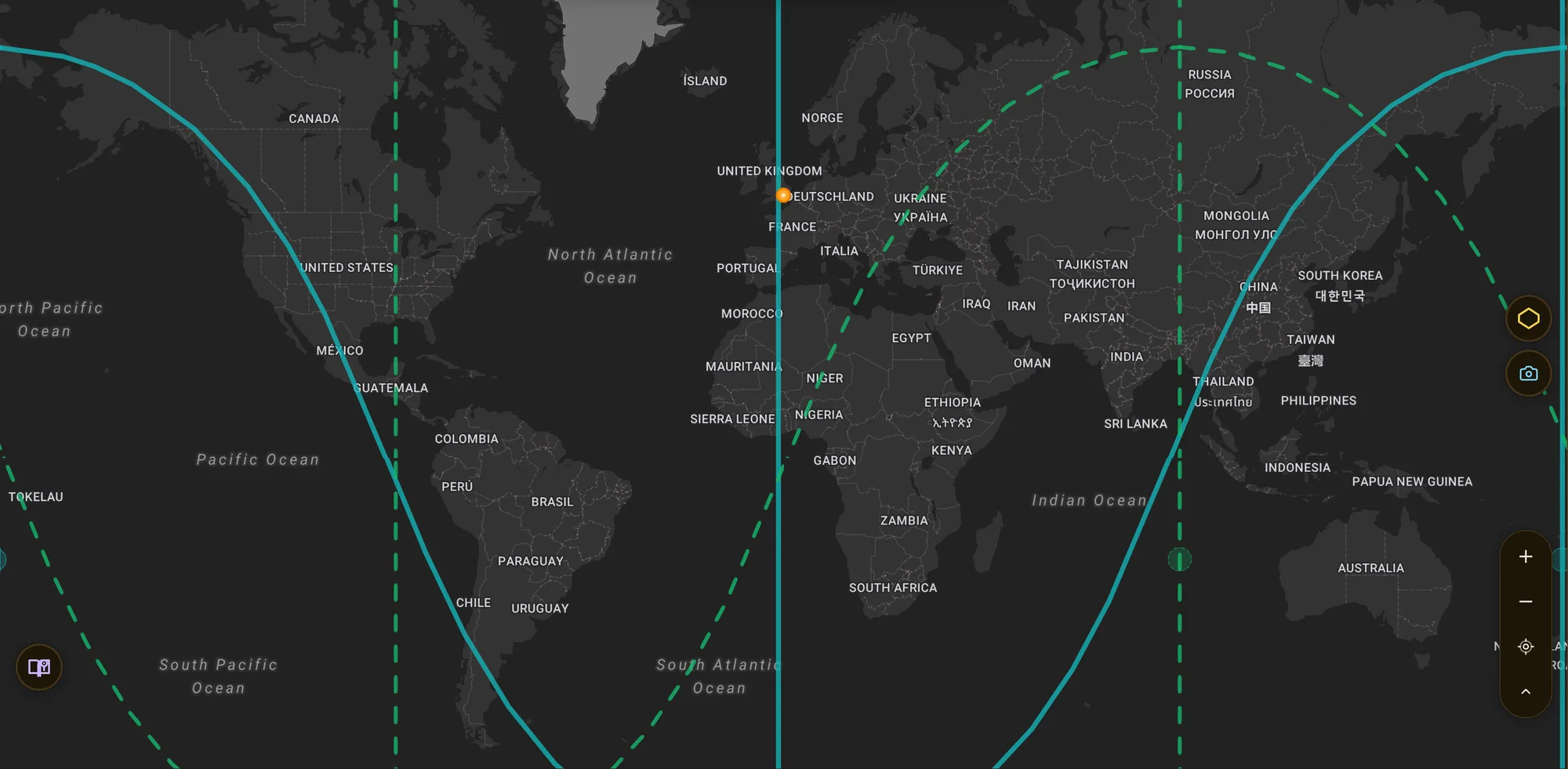
Neptune in Human Design mode, one chart, nothing else showing. Solid lines are the Personality cast (birth moment); dashed lines are the Design cast (88 degrees of the Sun earlier). They do not overlap because they are two different moments: the Earth had turned under the sky between them, so the same planet rises and sets over different ground.
The map labels every Human Design line as Design or Personality. Read the label before you read the theme. And hold the doctrine line the Human Design guide holds: your bodygraph does not move when you do. A place amplifies a gate you already carry. It never hands you one you do not.
Your Neptune is not everyone's Neptune
Everything above is the general meaning of a Neptune line. Your own chart tunes it. In astrology, Neptune's sign says how it goes about its business, its house says where in life it is rooted, and its dignity says how strong its hand is. A Neptune at home in its own sign carries a line differently from one in detriment. In Human Design the tuning is the gate and the line: which of the 64 gates Neptune sits in names the specific theme the line carries, and the line number, 1 to 6, says how that theme tends to play out. None of this changes where the line falls on the map. It changes what the line is about.
Two people with a Neptune MC line through the same city. One has Neptune in Gate 22, Openness: the creative-calling line there is about grace and emotional openness in public, the artist people feel safe around. The other has Neptune in Gate 36, Crisis: the same line is about art made from the dark, the gift found inside the hard passage. Both are Neptune MC. They are not the same calling.
ELA Map reads all of it. Tap any Neptune line and the panel shows the sign and house behind it; the heatmap reading shows how its dignity weighs in. Switch to Human Design mode and the same line shows its gate, its line number, and whether it came from the Design or the Personality side.
Keep going
- The meaning of an astrocartography line: the hub guide, every planet on every angle.
- Uranus line meaning: the first outer line, disrupting where Neptune dissolves.
- Pluto line meaning: the third, and the most intense.
- Moon line meaning: feeling with edges, where Neptune has none.
Find your Neptune line
Free, no card. Every Neptune line from your own chart, drawn across the Earth.
Get started